Most sellers assume gold is gold. A troy ounce of .9999 fine metal is a troy ounce of .9999 fine metal, and at face value that is true. The bid the dealer quotes is built on that. What sits on top of the bid, or gets shaved off it, is a separate calculation that has nothing to do with the metal itself and everything to do with how fast the dealer can move the piece back out the door.
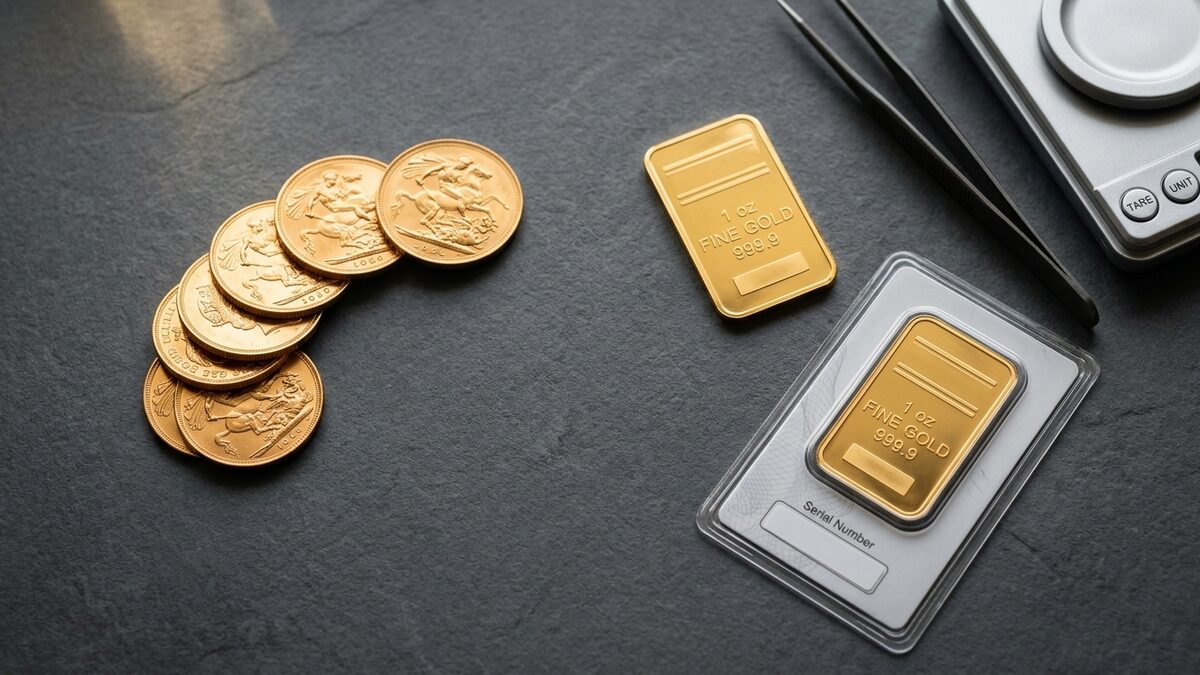
Sovereign coins are the easiest format for a dealer to resell. A 1 oz American Gold Eagle, a Canadian Maple Leaf, a South African Krugerrand, a Vienna Philharmonic: these are recognized on sight by every coin shop, refiner, and private buyer in the country. The dealer does not need to test them past a basic verification step, does not need to send them to a refiner, and can list them for resale the same afternoon. That liquidity translates directly into a tighter spread. In a normal 2026 market, a clean sovereign 1 oz coin typically pays in the range of spot minus 1% to spot plus 1.5%, depending on the dealer and the coin.
Bars are a different conversation. A 1 oz minted bar from a major refiner like PAMP, Valcambi, or the Royal Canadian Mint, still in its assay card, sells nearly as well as a sovereign coin. The assay card is the key piece. It carries the serial number, the refiner's stamp, and the verification that lets the next buyer skip the testing step. A sealed, carded 1 oz minted bar in 2026 commonly pays within half a percent of what a sovereign coin would pay.
Strip the assay card off and the math changes. A loose 1 oz minted bar with no card requires the dealer to verify it independently, and that cost gets passed back to the seller as a wider spread, often 1.5% to 3% below spot. Poured bars, the rougher cast pieces from secondary refiners or older inventories, sit lower still. They are harder to authenticate, harder to resell to retail buyers, and frequently end up routed to a refiner for melt. Dealers price accordingly, and a poured bar without provenance can pay 3% to 5% below spot even in a strong market.
Weight matters more than format above one ounce
Once you move past the 1 oz tier, the coin advantage compresses. A 10 oz minted bar in sealed assay packaging is one of the most liquid bullion products on the market, and it typically pays a hair closer to spot than ten individual 1 oz coins would, because the dealer handles one piece instead of ten. The same is true at the kilo tier. A 1 kg minted bar from a recognized refiner moves efficiently through the wholesale channel and the per-ounce payout is usually the best you can get for a single transaction.
Fractional coins run the other direction. Tenth-ounce and quarter-ounce sovereigns carry higher premiums when purchased new, and that premium does not survive the sell side. A tenth-ounce Eagle typically pays a per-ounce rate noticeably below what a full 1 oz coin would pay, because the dealer's handling cost per piece is the same regardless of weight.
The practical takeaway: if you bought fractional coins as gifts or for affordability, you will get less per ounce reselling them than you would for the same gold in full-ounce form. That is not a dealer markdown so much as a structural feature of the market.
What to bring with you, and what to expect at the counter
Original packaging is worth more than most sellers realize. A sovereign coin in its original mint capsule or tube, a minted bar in its sealed assay card, a set with the original certificate of authenticity: each of these reduces the dealer's verification time and removes resale friction. The price difference between a carded bar and a loose bar of identical weight and refiner is real, and it is usually larger than the cost of keeping the packaging intact.
Expect any reputable dealer to weigh each piece on a calibrated scale, test with an XRF analyzer or specific gravity check for anything outside common sovereign formats, and quote against the live spot price at the time of the transaction. Spot moves through the day, so a quote given in the morning is not binding at 3 p.m. unless the dealer locks it in writing.
For sellers weighing format before they buy: sovereign 1 oz coins and sealed minted bars in the 1 oz to 10 oz range are the two formats that consistently resell closest to spot. Loose bars, poured bars, fractional coins, and anything without provenance sit further from spot, sometimes meaningfully so. The metal is the same. The market is not.