Selling Gold in Orlando, FL: Statutes, Tax & the Visitor Profile
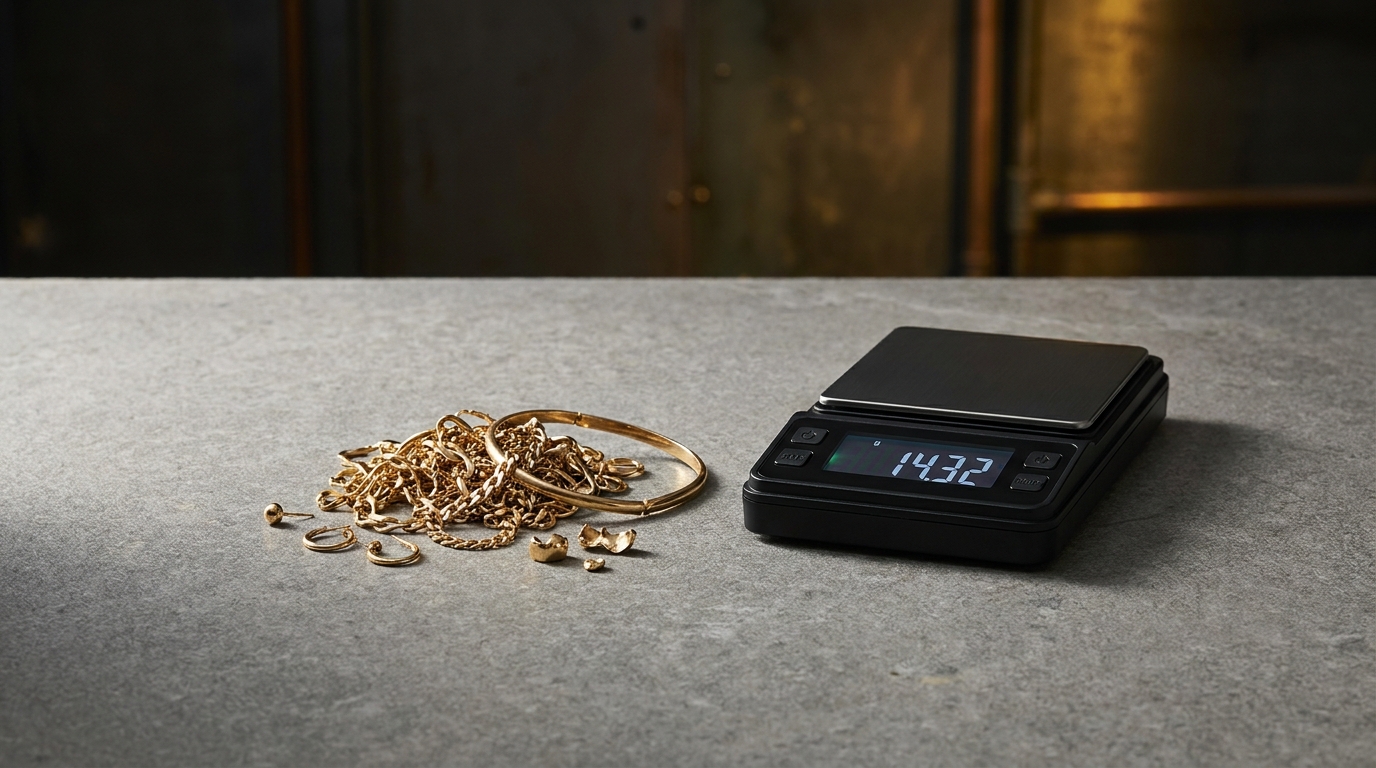
Orlando processes 75 million leisure visitors a year; a measurable share arrive at gold desks with inherited or unwanted metal. Florida law sets distinct rules for those transactions — a 30-day resale hold, mandatory law enforcement reporting, and photo-ID requirements that apply to everyone, including foreign passport holders.
The 30-Day Hold That Surprises Most Walk-In Sellers
Florida Statutes §538.06 requires any secondhand dealer who buys precious metals, gemstones, or jewelry to hold the item for 30 calendar days before reselling, bartering, or altering it. Ordinary secondhand goods face only a 15-day hold — the doubled window applies specifically to precious metals. That clock does not start until the dealer files the required transaction report with local law enforcement. If the report is late, the hold extends accordingly.
This does not mean payment is withheld for 30 days. It means the dealer cannot turn around and resell your chain or coin until the hold lapses. For most sellers that distinction is academic, but it is worth knowing before you hand anything over.
Law Enforcement Is Notified of Every Transaction
Under Chapter 538, the dealer must notify — in writing or electronically — a law enforcement official designated by the sheriff or chief of police of the jurisdiction. This is a required step for every purchase, not a selective audit. The holding period does not begin until that notification is complete. Orange County and the City of Orlando may layer additional local requirements on top of the state statute; if you are selling a large lot, confirm with the dealer which agency receives the report.
Florida's Sales-Tax Changes: 2025 and 2026
Florida removed its $500 minimum purchase threshold for the sales-tax exemption on gold, silver, and platinum bullion, effective August 1, 2025, through House Bill 7031. Before that date, a bullion purchase under $500 was taxable. It no longer is. The exemption covers gold, silver, and platinum — palladium is explicitly excluded from Florida's exemption and may remain taxable unless a separate exemption applies.
A second change took effect July 1, 2026. CS/HB 999 recognizes qualifying gold and silver coins as legal tender in Florida and exempts them from sales tax. To qualify, a gold coin must be at least 99.5% pure gold; a silver coin must be at least 99.9% pure silver. A 90% silver dime, for example, does not meet that threshold, though it may still fall under the broader bullion exemption. These Florida rules affect sales tax only — capital gains treatment is a federal question. See the coins and bullion guide for notes on cost-basis tracking.
ID Requirements
Florida Statutes §538.04 requires the dealer to verify every seller's identity with a government-issued photographic identification card — a driver's license, military ID, or equivalent. A foreign passport meets the standard. This matters in Orlando specifically: 9% of the 75,333,800 visitors in 2024 were international, with Canada the top source market at 1.29 million visitors, followed by the UK, Brazil, Mexico, and Colombia. Canadian and British sellers often carry a passport as their only photo ID. That is acceptable under §538.04; bring it.
The Tourism Factor
Orlando welcomed 75,333,800 visitors in 2024 — a 1.8% increase over 2023, per Visit Orlando figures released May 8, 2025. The breakdown was 81% domestic leisure, 10% domestic business, and 9% international. Orlando International Airport processed 57.2 million passengers in 2024, ranking it the 9th busiest airport in the United States. MCO and Las Vegas's Harry Reid International are the only two airports in the US top-10 that are pure destination airports rather than airline hubs, meaning nearly every passenger is a traveler, not a connecting flight.
That volume shapes the walk-in seller profile. In Orlando the dominant pattern is a leisure traveler clearing out inherited or unwanted jewelry before flying home — not an investor or an estate executor running a planned liquidation. If you are a tourist with a single piece or a small lot, dealers here are accustomed to it.
Practical Checklist Before You Go
- Photo ID: Government-issued with your photo. A foreign passport is acceptable under Florida law.
- Know your metal: Gold, silver, and platinum qualify for Florida's bullion exemption. Palladium does not. Use the gold and silver reference page to confirm what you have.
- Bullion coins — check purity: CS/HB 999 applies to coins that are at least 99.5% gold or 99.9% silver. Know your coin's specification before you go.
- Expect law enforcement reporting: Every transaction is reported. This is a statutory routine, not an investigation.
- The 30-day hold is on resale, not on you: Once payment is made, you are finished. The hold governs what the dealer can do with the item afterward.
The Miami page covers the same Florida statutes in a different seller context — higher concentrations of estate and Seybold-district trade. For a general walkthrough of what to expect at any cash-for-gold desk, see the cash-for-gold overview.
Sources
This page is informational. Figures and rules cited are accurate as of the review date above and can change.
Last reviewed August 30, 2026.
Get a quote before you sell
Use the live calculator to see what your gold is worth at today’s spot price — weight, karat, and a real number, not a range.
Calculate now →