Selling Gold in Birmingham, AL: State Tax Rules and Local Dealers
Alabama has stacked three pro-seller statutes since 2018: a sales-tax exemption, a capital-gains exclusion, and a legal-tender reaffirmation. Birmingham sellers benefit from all three. The exemption carries a hard expiration date, the county tax picture has an unresolved gap, and the dealer network is thin for a 1.19-million-person metro.
State Sales-Tax Exemption
Act of Alabama 2018-164 amended §40-23-4 and §40-23-62 to exempt gold, silver, platinum, and palladium bullion from state sales and use tax, effective June 1, 2018. Extended by SB 13 in 2022, the current exemption runs through May 31, 2028. To qualify, bullion must be refined, carry at least 80% precious-metal content (lowered from the original 90% threshold by subsequent legislation), and be priced on market value rather than numismatic or decorative value. Jewelry and works of art are explicitly excluded.
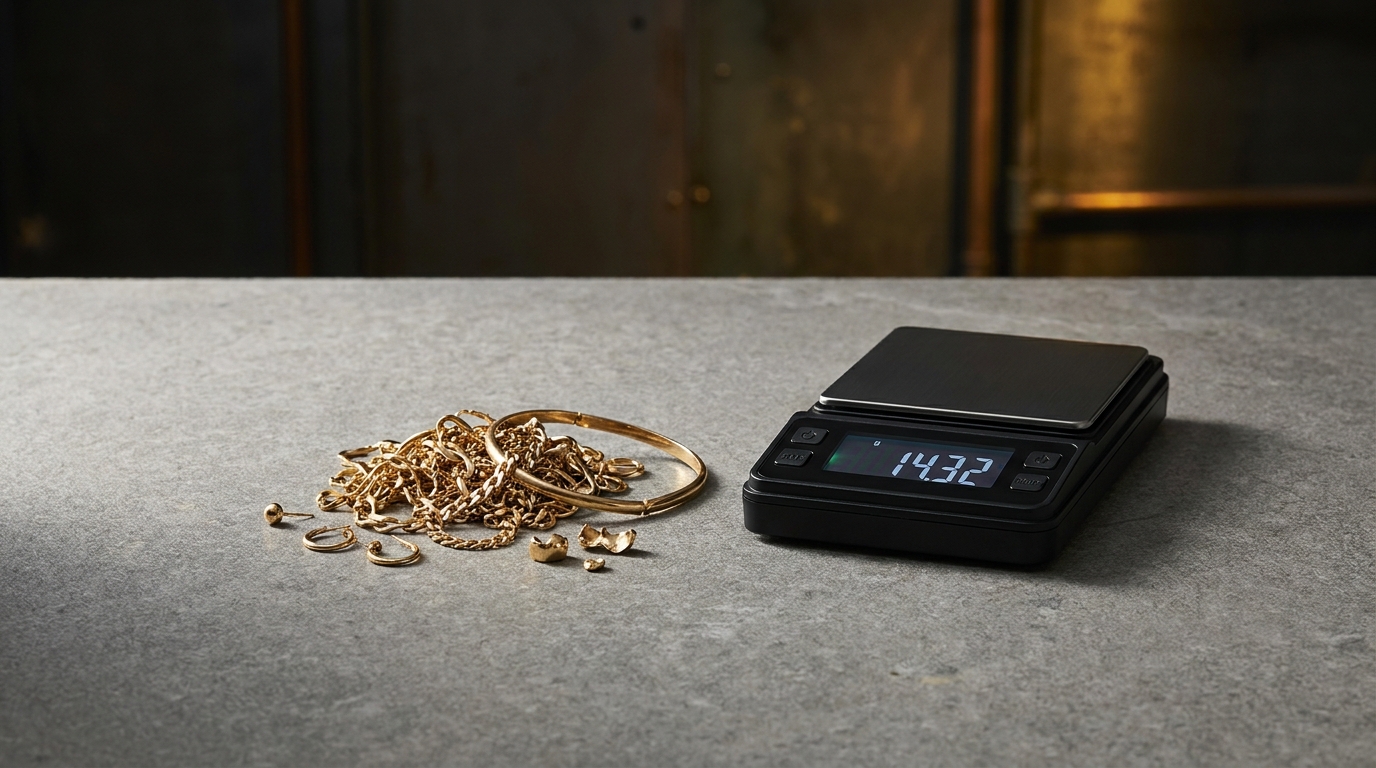
The 80% purity floor has real consequences. A 22-karat gold coin at 91.7% gold qualifies. A 14-karat gold chain at 58.3% gold does not — it is jewelry regardless of melt weight, and the exemption does not apply.
Hard Sunset in 2028
The Alabama exemption is not permanent. States including Utah, North Dakota, Texas, and Wyoming hold permanent bullion exemptions backed by state depositories. Alabama's exemption has been renewed three times since 2018 and must be renewed again before May 31, 2028. Sellers transacting close to that date should verify current legislative status before assuming tax-free treatment.
Jefferson County's 2% Sales Tax
Alabama's base state rate is 4%. Jefferson County — which contains Birmingham — levies an additional 2% sales tax under separate county authority. No source reviewed for this page confirmed whether Jefferson County has enacted a parallel bullion exemption. Buyers of bullion who want certainty on county-level tax treatment should ask the dealer directly or check with Jefferson County Revenue before transacting.
Capital-Gains Exemption
Alabama's Sound Money Tax Neutrality Act — Act of Alabama 2024-447 — was signed by Governor Ivey on May 17, 2024. It excludes net capital gains from the exchange of precious-metal bullion from Alabama personal income tax calculations. The enactment made Alabama the 13th state in the country not imposing state capital-gains taxes on gold and silver sales. Federal capital-gains tax still applies; the Alabama exclusion is state income tax only. Sellers with large positions should confirm current law with a tax professional.
Legal Tender Reaffirmation
Senate Bill 130, enacted as Act of Alabama 2025-123, went into effect October 1, 2025. The Alabama Legal Tender Act reaffirms gold and silver as legal tender. It passed 102-0 in the House and 31-0 in the Senate. The act does not require any dealer or individual to accept gold as payment unless a contract specifies it. For sellers, it changes nothing about how a buyback offer is quoted or settled.
Dealers in the Metro
Four named specialist coin and bullion shops operate across the Birmingham-Hoover MSA. For a metro of 1.19 million people — ranked 47th nationally — that is thin coverage.
- Alabama Gold Refinery LLC — 1927 29th Ave S, Homewood, AL 35209. Family-owned, open since March 2011. Handles coins, estate jewelry, fine watches, diamonds, and precious metals. Hours are Monday–Friday, 10 a.m.–4 p.m., by appointment only. Walk-in sellers will be turned away without a scheduled time.
- Southern Coin & Collectibles — 1564-A Montgomery Hwy, Hoover, AL 35216. Established 2004; PCGS and NGC certified and an official U.S. Mint distributor. Better suited for graded coins than raw scrap.
- Doug's Coin Shop — 2907 18th St S, Birmingham, AL 35209.
- Coin Castle West — 700 Academy Dr, Suite 106, Bessemer, AL 35022.
No published bid-ask spread data exists for Birmingham dealers. You will need to call or visit to get a firm offer. Given Alabama Gold Refinery's appointment-only policy, plan at least a day of lead time before showing up with metal. Current spot prices are available on the gold prices page.
Who Tends to Sell Here
UAB — University of Alabama at Birmingham — and its hospital system employ 28,000 people, making it by far the area's largest single employer. A healthcare-dominated workforce tends to produce more estate liquidations, inherited jewelry, and watch sales than investment bullion accumulated over years. If you are selling scrap or estate pieces rather than investment-grade bars, the scrap gold guide and the jewelry selling guide are more useful starting points than spot-price calculations. For bullion coins and bars, see the coins and bullion page.
Sources
This page is informational. Figures and rules cited are accurate as of the review date above and can change.
Last reviewed August 30, 2026.
Get a quote before you sell
Use the live calculator to see what your gold is worth at today’s spot price — weight, karat, and a real number, not a range.
Calculate now →