Do Commemorative Gold Coins Sell Above Melt?
The short answer is sometimes, and less often than most sellers hope. Whether a commemorative or collectible gold coin brings more than its melt value depends on one thing: will a buyer pay extra for the coin itself, or only for the gold inside it? Here is how that math works in 2026.
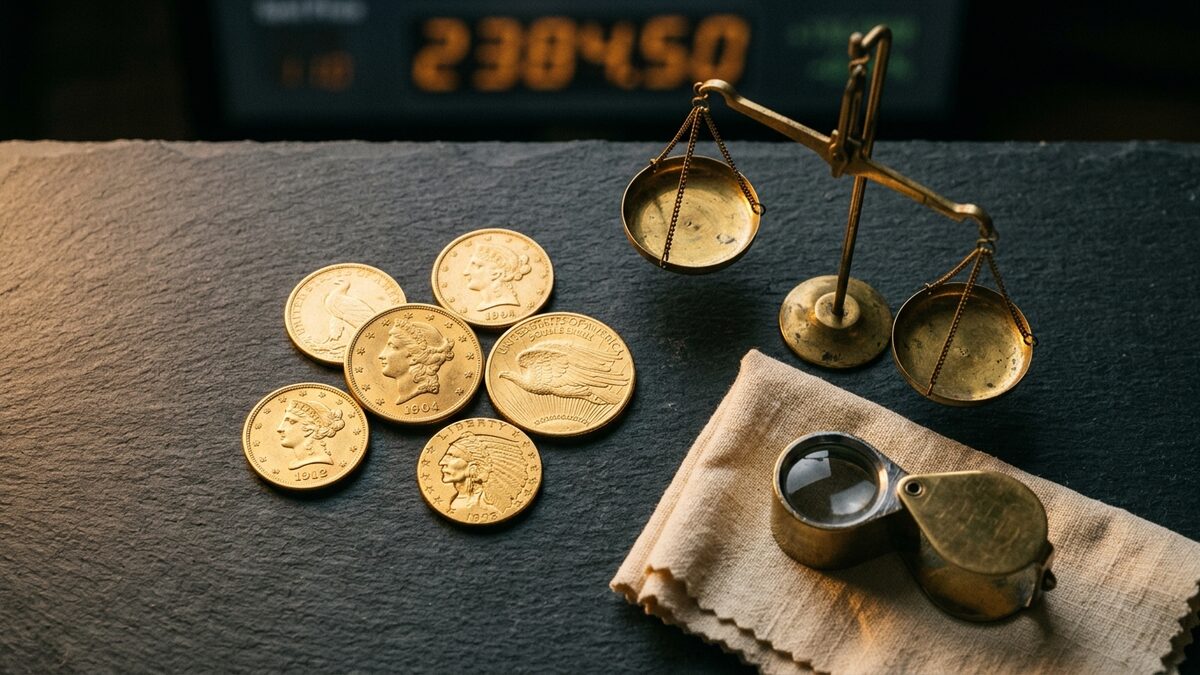
A coin sells above melt only when someone will pay for something the metal does not provide. That something is rarity, condition, or genuine collector demand. We call that the numismatic premium, and it sits on top of the gold value. For a large share of commemorative coins that premium is thin, and when gold runs high it can disappear entirely.
Take the US Mint's own gold commemoratives. A $5 gold commemorative contains about 0.2419 troy ounces of gold. When those coins were first sold, the Mint added a $35 surcharge that went to nonprofit groups tied to the theme on the coin. That surcharge was never metal value; it was a donation built into the price. On the resale market a buyer pays for the gold, not the cause. In 2011, when gold spiked, the Mint actually pulled its $5 gold commemoratives from sale to reprice them, because it was earning almost no premium over melt. When even the issuer cannot hold a premium during a price run, you learn something important about these coins.
So the first rule is simple. High mintage, common date, and no special condition usually equals melt, or very close to it.
Here is the part most sellers miss. A premium is a percentage sitting on top of the metal. When spot is low, a $40 premium looks large next to the gold. When spot doubles, that same $40 becomes a rounding error, and the market stops pricing it. Numismatic News reported in 2025 that with spot rising and premiums shrinking, many coins, including modern commemoratives, were selling near their intrinsic value. Collectors on the trading forums saw the same thing in 2024 when gold pushed past $2,300: premiums on bullion-grade pre-1933 gold had basically evaporated. Raw Liberty and Saint-Gaudens pieces were changing hands at melt, and even graded generic Saint-Gaudens coins in MS63 and MS64 were trading right around melt or a touch above. That is not a buyer being cheap. That is the market telling you the collector premium got swallowed by the metal.
Pre-1933 US gold is the clearest case to study. Liberty Head, Indian Head, and Saint-Gaudens coins carry real history, and in a calm market common dates trade at a modest premium over their gold content. When spot runs hard, that premium compresses and the common dates behave like bullion. The coins that keep their premium through a spike are the scarce dates and the top-grade certified examples, because the collectors competing for those care about the coin, not the ounce.
So which commemorative and collectible coins clear melt in a strong gold market? A short list holds up:
- A genuinely scarce date or low-mintage issue, where collector demand outstrips supply
- A high-grade certified coin, where condition is the draw and the grade is documented on the holder
- A coin in a series with a deep, active collector base competing for examples
Everything outside those categories tends to settle at or near its gold weight.
If you are getting ready to sell, price the metal first. Weigh the coin, note its fineness, and apply the live spot price. That number is your floor, and for most common pieces it is close to your ceiling too. A fair buyer pays more for refined, known-weight gold than for scrap jewelry, because there is no refining risk and the content is certain. Investment-grade coins and bullion typically start at 90% of gold value — or higher* — well above a scrap rate. Anything on top of that floor has to be justified by rarity or grade, and an honest buyer will tell you when your coin carries it.
*Payout percentage depends on gold content (karat/purity), item type, weight and volume, and is subject to change. Final offer after in-person or mailed evaluation.
Before you sell, do two quick checks. First, look up the mintage for your coin and its date. That one figure tells you whether you are holding a common bullion-style issue or something scarce. Second, decide whether professional grading is worth it. Grading costs money and time, and it only pays off when the coin is scarce or in exceptional condition. For a common modern commemorative, grading usually costs more than the premium it would ever unlock.
The realistic expectation for 2026 is this. Most commemorative gold coins sell at or very near melt, especially while gold sits at elevated levels. A smaller set, the scarce dates and the high-grade certified pieces, still earns a real premium that a knowledgeable buyer will pay. Know which one you are holding before you walk in and no offer will surprise you. If you want a straight number on your specific coin, weigh it, apply the live spot price, and call to confirm what it brings today.